You've seen it on menus, on Instagram, on the packaging of every matcha product that wants to sound premium. "Ceremonial grade." But nobody ever really explains what it means, and the brands that do usually bury it in three paragraphs of origin story before getting to the point.
Here's the short version: ceremonial grade matcha is the highest quality category of matcha. It's made from the youngest leaves, picked first, ground slowly, and meant to be drunk as it is. No sweetener, no milk, nothing to hide behind.
The longer version explains why any of that matters to you.
What "grade" actually means in matcha
Matcha isn't one-size-fits-all. Like olive oil or coffee, the same base ingredient can range from cheap and unpleasant to genuinely excellent. The difference comes down to how and when the leaves were harvested.
There are two main categories you'll encounter:
Ceremonial grade is the top tier. It uses first-harvest leaves: the first leaves picked from the plant each spring, when they're youngest and most nutrient-dense. These leaves are shaded from sunlight for about three to four weeks before harvest, which forces the plant to produce more chlorophyll and L-theanine. After picking, the stems and veins are removed, and what's left is stone-ground slowly into a fine powder. The result is bright green, smooth, and naturally sweet with an umami depth. No bitterness.
Culinary / beverage grade covers everything that didn't make that first cut. It might be later harvests, older leaves, or a faster processing method. It still functions as "matcha": it'll turn your smoothie green, it'll work in a latte if you add enough oat milk and sugar. But the taste is sharper, more bitter, and the colour tends toward yellow-green rather than vibrant emerald.
Both are technically matcha. They taste nothing alike.
Why this matters more than you think
If you've ever tried matcha and thought "this is fine but I don't really get what all the fuss is about," you almost certainly had culinary grade. Or worse, something sold as matcha that was neither.
This is the most common reason people give up on matcha too early. They try a café version made with culinary powder and oat milk piled on top to mask the bitterness, decide it's just a trendy drink that doesn't deliver, and go back to coffee. Totally fair conclusion from that experience. Also completely wrong about what matcha can be.
Good ceremonial grade matcha is smooth the moment it hits your tongue. Creamy, even without milk. Sweet enough that you don't need sugar. The umami hits after. That savoury depth that lingers and makes you want another sip. It's not subtle. It doesn't taste like green tea from a bag. It tastes like something worth paying for.
That gap between "the matcha I've tried" and "what matcha can actually taste like" is exactly the trust issue ceremonial grade is meant to close.
What makes first-harvest leaves different
The shading process is the detail that changes everything.
When tea plants are shaded before harvest, they go into stress mode. Blocked from full sunlight, they produce more chlorophyll to compensate, which is what gives ceremonial grade matcha its vivid green colour. They also produce significantly more L-theanine, the amino acid that works alongside caffeine to give you focused energy without the jittery edge.
First-harvest leaves are the most tender and have the highest concentration of these compounds. Later harvests have progressively less. That's why the grade distinction isn't just marketing. It's a direct reflection of what's chemically happening in the leaf.
When those first-harvest leaves are then stone-ground slowly, at low heat, to avoid degrading the flavour, you get a powder that dissolves smoothly, whips into a vivid green froth, and tastes the way matcha should taste.
Speed and heat destroy this. Mass-produced matcha uses blade or ball mills that grind quickly and generate heat, which oxidises the leaf and dulls the flavour. Stone-grinding takes longer. It produces less per batch. It costs more to do properly. That's reflected in the price, and in the cup.
So what should "Ceremonial Grade" on a label actually tell you?
Here's where it gets a bit less tidy: "ceremonial grade" isn't a legally protected term. Any brand can put it on packaging. It doesn't guarantee quality on its own.
What does tell you more:
Origin matters. Japan (particularly regions like Uji and Kagoshima) and specific parts of China have long histories of ceremonial grade production with established farming standards. Single-origin sourcing usually signals that the brand knows exactly what they're buying.
Harvest information matters. "First-harvest" or "first-flush" on the label is a more specific claim than "ceremonial grade" alone. If a brand tells you where and when the leaves were picked, that's a good sign.
Colour tells you a lot. Vibrant, bright green powder is a strong indicator of quality. Dull, olive, or yellowish powder means either poor quality or poor storage.
Price is a rough guide. Genuine ceremonial grade matcha is not cheap to produce. If something is priced like culinary grade, it's probably culinary grade. A 30g tin of real ceremonial grade typically starts around €30 for good reason.
Certifications add a layer of accountability. Fair Trade, Rainforest Alliance, and similar third-party certifications don't verify grade specifically, but they do verify that sourcing and production meet documented standards. Serious ceremonial grade producers tend to hold themselves to these.
Zenara's matcha is first-harvest ceremonial grade from Uji and Kagoshima in Japan, certified vegan, halal, fair trade, and Rainforest Alliance approved. Not because those certifications are a marketing trick. Sourcing matcha well means caring about where it comes from and how it's grown.
Why ceremonial grade is the only type worth drinking straight
Culinary grade has its place. Matcha cookies, matcha ice cream, baked goods: any application where you're mixing matcha into something with strong competing flavours, and the point is colour and a background matcha note rather than a clean, smooth cup. Culinary grade works for that.
But for drinking? Ceremonial grade is the only grade that makes sense.
When you're drinking matcha straight, as a traditional whisked bowl or a simple latte, the flavour is the whole point. You want smooth. You want creamy. You want that umami. Culinary grade poured straight into water or milk is going to taste bitter, flat, and disappointing regardless of how you make it.
This is why Zenara only uses ceremonial grade. There's no version of the product where "good enough" quality makes sense.
The single-serve format is convenient, yes. But convenience built on mediocre matcha would just make mediocre matcha more accessible. That's not the point.
Making ceremonial grade matcha at home
The traditional method uses a set of accessories such as: bamboo whisk (chasen), a ceramic bowl (chawan), and water at around 80°C. It takes a few minutes and produces a thick, frothy bowl of matcha. If you enjoy the process, it's genuinely satisfying.
But it's not the only way.
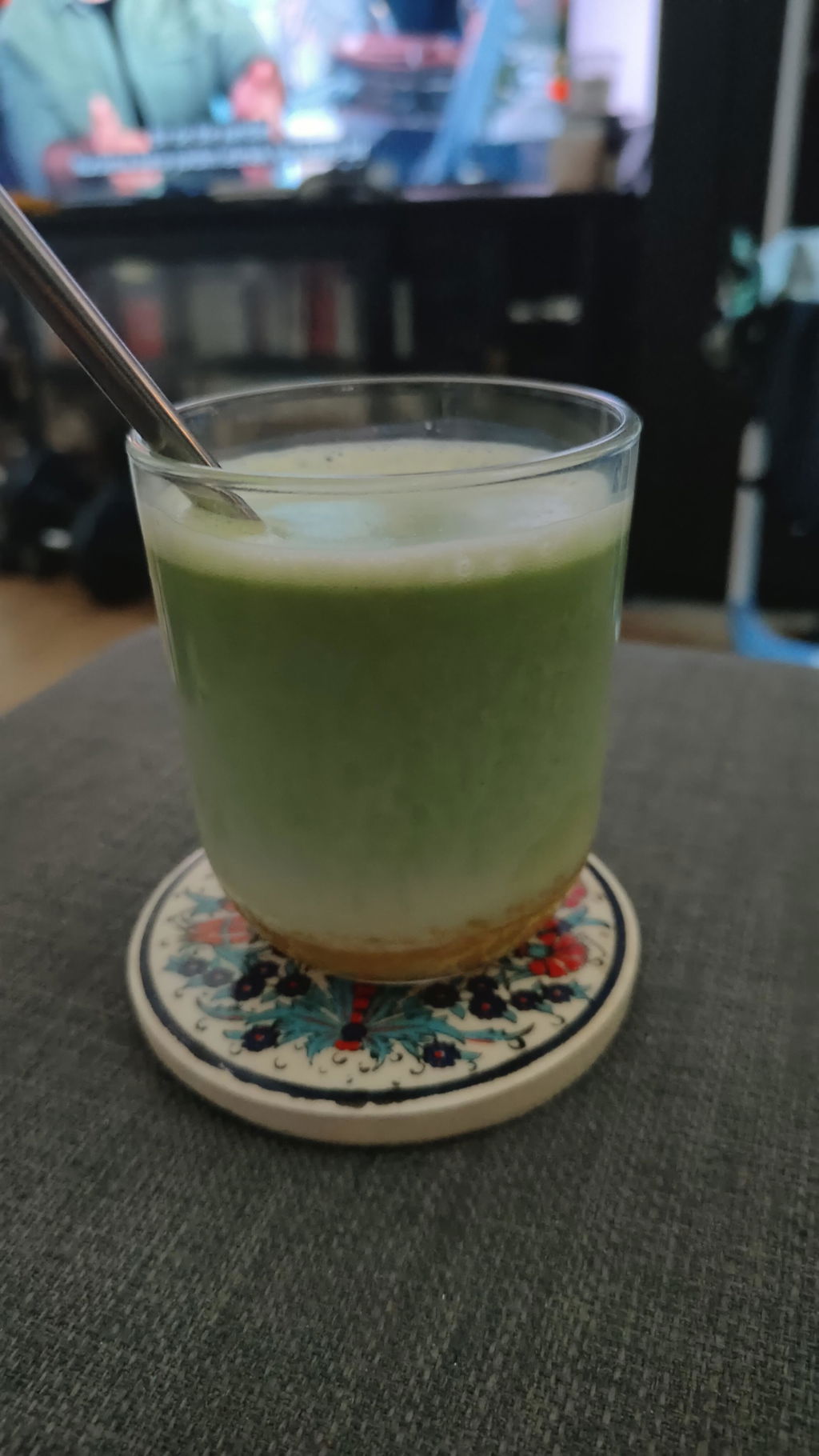
Zenara's single-serve sticks have the exact right dose of ceremonial grade matcha pre-measured per stick. No scale needed, no measuring, no mess. Tear one open, pour over hot water or milk, use an electric frother for 20 seconds, and you have a proper ceremonial grade matcha latte in under five minutes. Nothing lost on the quality side. Everything gained on the effort side.
If you've never tried ceremonial grade at home, starting with the sticks is the lowest-friction way to find out what good matcha actually tastes like.
The bottom line
Ceremonial grade matcha is not just a label that sounds nice. It's the category of matcha made from first-harvest leaves, stone-ground slowly, with a flavour profile that culinary grade simply can't match.
If your only matcha experience has been café lattes or supermarket powder, you haven't tasted ceremonial grade. And that's the experience that makes people understand why matcha people are so serious about their matcha.
The easiest way to close the gap is to try it yourself.