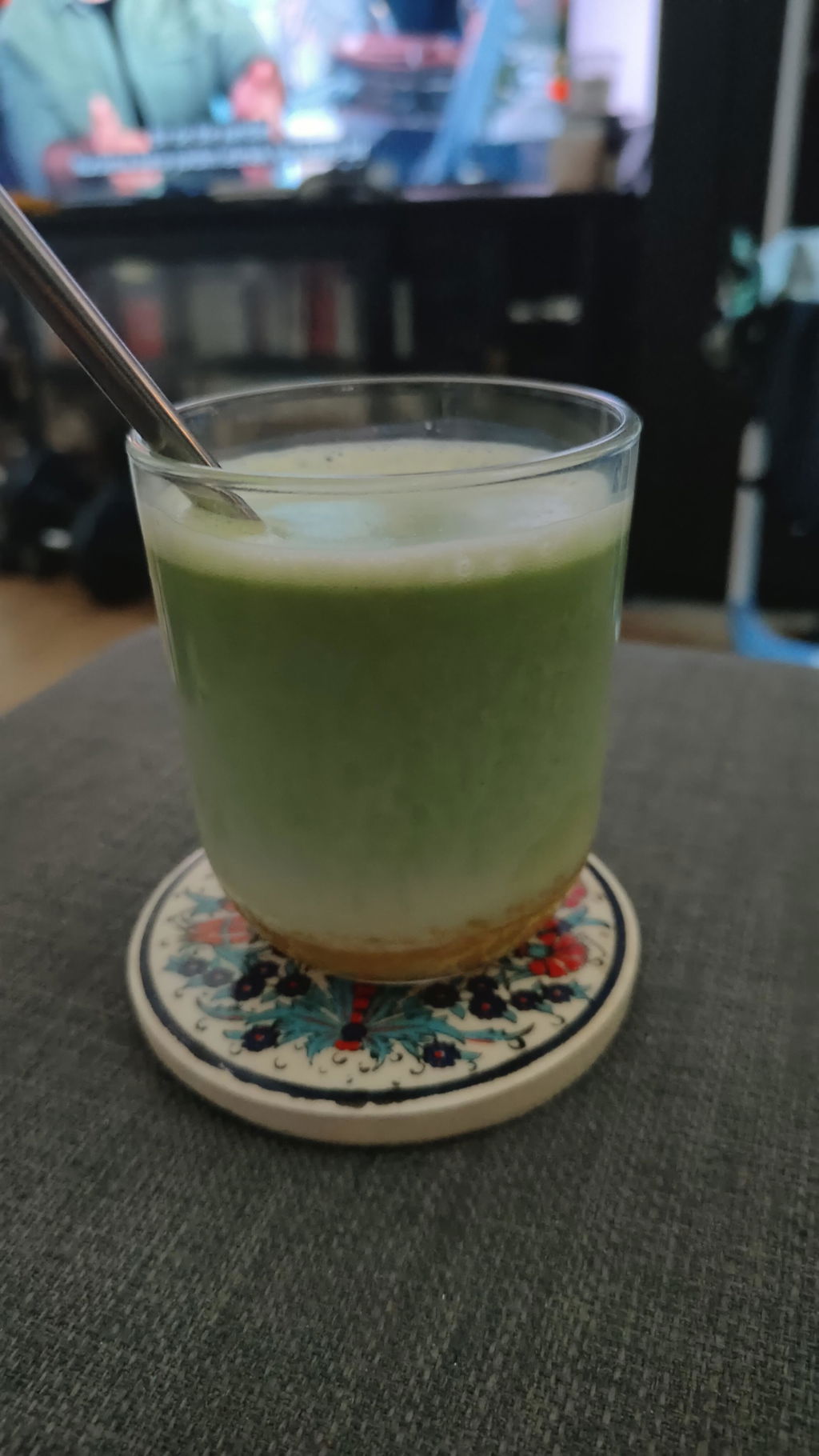
Coffee hits hard and fast. Matcha hits differently. If you've been curious about switching but aren't sure whether the "cleaner energy" claim actually holds up, here's the honest answer: it does. Matcha gives you a calmer, more focused kind of energy, without the jitters, without the crash. Here's exactly why that happens, and how the two actually stack up.
What actually happens when you drink matcha
Matcha contains two compounds that work together to fuel you: caffeine and an amino acid called L-theanine. L-theanine slows how your body absorbs caffeine, so instead of hitting a spike all at once, the energy builds gradually and holds steady. A 2008 study published in Nutritional Neuroscience found that the combination of caffeine and L-theanine improves attention and alertness more effectively than either compound on its own. One serving of matcha contains around 60 to 70mg of caffeine, roughly a third of a strong espresso, but the way it feels is a completely different experience.
Read more: What is Ceremonial Matcha?
Why coffee gives you jitters and matcha doesn't
When you drink coffee, your body gets a large caffeine hit in a short window. For a lot of people, that triggers a low-level stress response: heart rate goes up, cortisol spikes, and suddenly you feel wired but scattered. L-theanine works against this. It promotes alpha brain wave activity, the mental state associated with calm, focused concentration. So instead of feeling revved up with nowhere to direct the energy, you feel clear and ready to actually work.
This is why so many people describe the switch from coffee to matcha as going from "buzzing with anxiety" to "calm but sharp." The caffeine is still doing its job. L-theanine just takes the edge off.
Matcha vs coffee: the energy comparison
| Matcha | Coffee | |
|---|---|---|
| Caffeine per serving | 60 to 70mg | 100 to 200mg |
| Energy onset | Gradual (15 to 30 min) | Fast (under 15 min) |
| Duration | 4 to 6 hours | 2 to 4 hours |
| Jitters | Rare, L-theanine balances the caffeine | Common at higher doses |
| Crash | Rare | Common |
| L-theanine | Yes | No |
| Best for | Sustained focus, deep work | Quick burst energy |
The lower caffeine count is not a downside. It means you get enough to feel alert without tipping into anxiety territory.

How long does matcha energy last?
Matcha's energy typically lasts 4 to 6 hours, compared to 2 to 4 hours for coffee. Because the caffeine releases gradually, there's no sharp drop-off at the end. Most people return to their normal state slowly, without the wall you hit mid-afternoon after a double espresso.
Read more: Make Matcha Latte at Home
When to drink matcha for the best effect
Morning is the most popular time, and it makes sense. Matcha gives you a smooth start without the cortisol spike that coffee can cause first thing. It also works well around 10am or early afternoon when the focus window starts to fade.
Because it's gentler on your system, many people find they can drink matcha later than they'd drink coffee without disrupting sleep, though that depends on your individual caffeine sensitivity.
If you want it on the go, Ōritsu Ceremonial Matcha Sticks are ready in under 5 minutes. Hot water, whisk, done. No scale, no measuring, no mess.
Frequently asked questions
Does matcha give you as much energy as coffee?
Matcha has less caffeine than coffee, around 60 to 70mg per serving versus 100 to 200mg in a standard cup. But the quality of energy is different. Thanks to L-theanine, most people find matcha more focused and longer-lasting, without the jitters or crash. If you need a large, immediate jolt, coffee is faster. For sustained focus, matcha wins.
Is matcha good for focus?
Yes, and the science supports it. The caffeine and L-theanine combination has been shown to improve attention, reaction time, and memory more than caffeine alone. It's especially effective for tasks requiring concentration over a longer stretch, like deep work, studying, or creative projects.
Can I drink matcha if I'm sensitive to caffeine?
Matcha contains significantly less caffeine than coffee. Many people who struggle with coffee find matcha much easier to handle. The L-theanine also softens the typical side effects of caffeine like elevated heart rate and anxiety. If you're highly sensitive, start with half a serving and see how you feel.
Will matcha keep me awake at night?
It depends on your sensitivity and what time you drink it. Because matcha has less caffeine than coffee, many people find it less disruptive to sleep. As a general rule, avoid any caffeine within 6 hours of bedtime.
Ready to make the switch?
If you've been running on coffee and looking for something cleaner, the matcha energy vs coffee question doesn't have a complicated answer for most people: same focus, none of the drama. And when the matcha actually tastes good, smooth, creamy, no bitterness, it stops feeling like a sacrifice.
Zenara's Ōritsu Ceremonial Matcha Sticks are first-harvest, ceremonial grade, and take under 5 minutes to make at home. No complicated prep. No compromises on quality.